


Grand Theft Auto VI is avoiding direct references to real politicians. That does not mean Rockstar has taken politics out of Vice City. It means the studio wants its jokes to outlive the people currently begging to become one.
Rockstar senior vice president of narrative Rupert Humphries told Love Magazine that the team did not want Leonida to recreate “the exact world we live in”. As VGC reports, the game still includes campaign signs, robocalls, radio shows and the culture wars needed to make its fictional Florida feel alive.
The target has shifted from names to behaviour. A recognisable president can leave office, lose an election or become yesterday’s impression before a game finishes development. A conspiracy addict livestreaming from a swamp will probably still make sense in 2036.
GTA VI is satirising systems, not campaign calendars
Humphries said Rockstar looks for the heart of an issue, then exaggerates the part it finds revealing until the position becomes ridiculous. That is the older Grand Theft Auto method at its best. The series rarely needed a president’s surname when talk radio, advertising, policing, property and celebrity offered bigger targets.

Direct parody can feel potent at launch and embalmed a year later. The fastest political joke is often the first to expire. Rockstar has lived with the consequences of a 13-year gap since Grand Theft Auto V; its writers know that a topical punchline may spend longer in production than it spends being topical.
Leonida gives them a deeper reservoir. Florida’s collision of beach wealth, collapsing infrastructure, invasive wildlife, grifters, retirees, nightlife, policing and internet fame is political before anyone hangs an election banner. Our look at the spaces GTA VI leaves outside its main story already suggested the map is designed to produce stories without waiting for a mission marker.
The phone is the real political machine
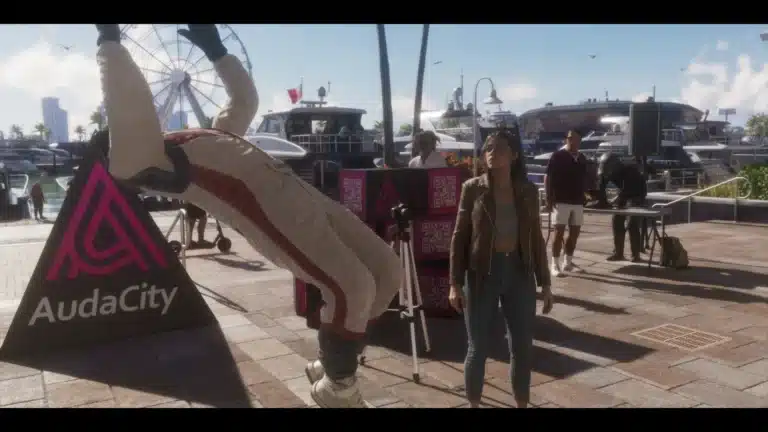
Rockstar’s trailers and official media gallery keep returning to phones, short-form video and public performance. Leonida’s citizens do not need to meet a governor to absorb politics. They encounter it as content: an outrage clip, a police chase framed for followers, a conspiracy sold as entertainment, or a campaign robocall interrupting the day.

That approach is safer for a game with a long shelf life, but it may also be sharper. A caricature of one politician lets everybody else pretend the joke belongs to the other side. A satire of incentives is harder to quarantine. If every character is rewarded for being louder, crueller and more camera-ready, the target is the machine that made them useful.
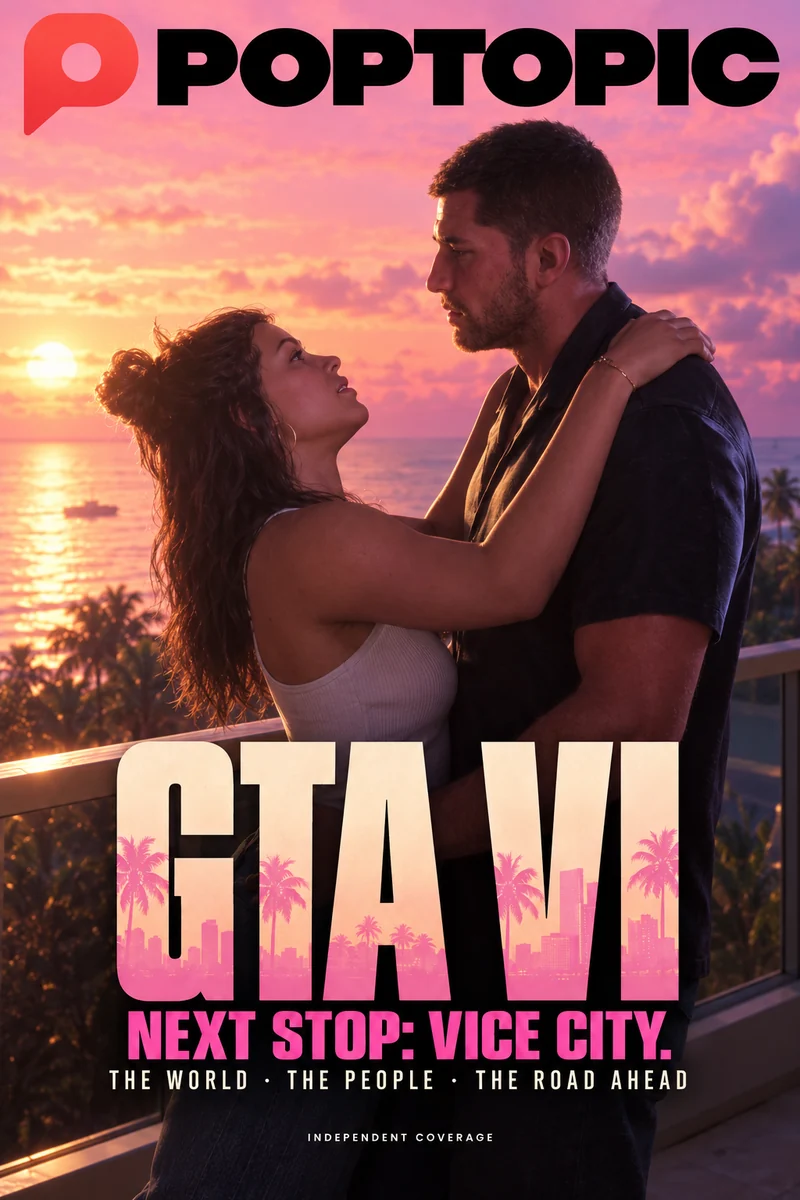
The internet has already proved how quickly GTA VI can become raw material for somebody else’s agenda. A fake image of Lucia at a pool spread because it fed an argument about the game’s women; POPTOPIC traced it back and found the viral Lucia image was AI-generated. Rockstar barely has to invent a culture war when the audience will manufacture one between screenshots.
Avoiding names raises the writing standard
There is a risk. “Timeless” can become timid if every joke floats above the institutions causing the problem. Rockstar cannot hide behind a fictional state while borrowing all of Florida’s heat. The satire has to show who benefits, who gets squeezed and why the absurdity keeps repeating.
The scale of Leonida gives the studio room to try. More than 170 animal species make the state feel like an ecosystem; its politics should work the same way. Campaigns, media, policing, tourism and crime can push against one another until the joke emerges from the system.
A president impression would earn an easy trailer laugh. Rockstar is betting that Vice City’s incentives will still be funny after the impression has retired.
About the author




The conversation
Be the first to join the conversation.