
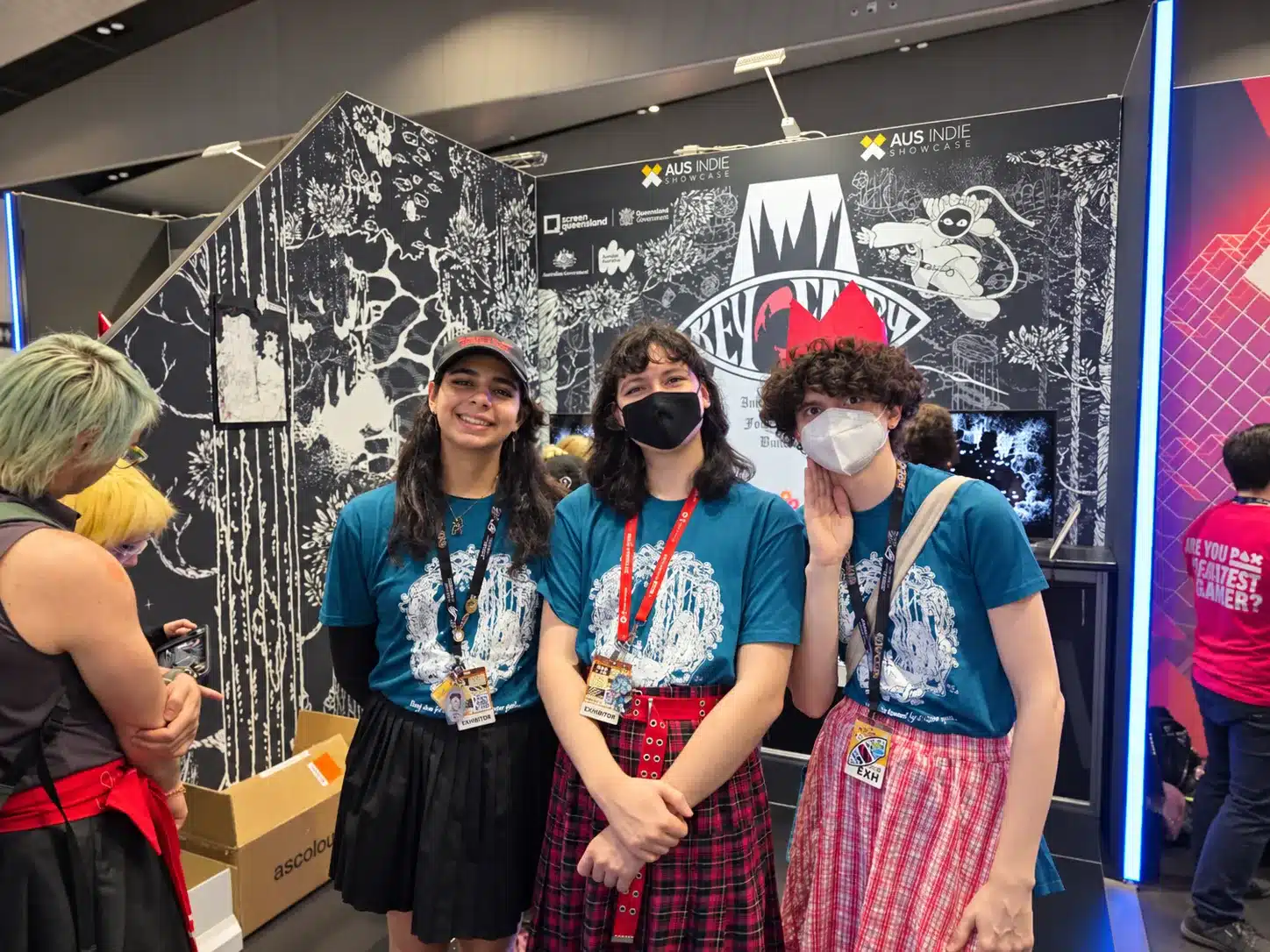

There is something wonderfully Queensland about turning up to PAX with a tiny fairy, a spool of thread and absolutely no intention of shooting anyone. Owl Machine’s Key Fairy booth is bustling when I stop by, with fans drawn to a forest that looks inked into the pages of a slightly dangerous storybook. Our Key Fairy interview soon becomes a conversation about something bigger than its striking artwork: how much a game can gain by taking things away.
The Brisbane studio has plenty to celebrate. Key Fairy won Excellence in Debut at the 2026 Australian Game Developer Awards on 7 October, and earned its place among this year’s PAX Aus Indie Showcase winners. Watching people gather around it, the recognition feels less like a badge on a poster and more like an invitation that has been accepted.
Co-founded by Tex Barnes and Mars Bleach, Owl Machine builds its adventure around an unlikely proposition: a bullet hell without the shooting. The team’s pitch during our conversation is disarmingly sweet. “It is about encountering terrible cursed monsters and trying to make friends with them anyway.”
A bullet hell that asks you to dance
Bullet hell usually means weaving through elaborate projectile patterns while pumping out enough firepower to make the problem disappear. Key Fairy keeps the pressure but changes your relationship with the creatures causing it. Your job is to dodge, move in close and collect their shattered stars, breaking the spell rather than killing its victim.
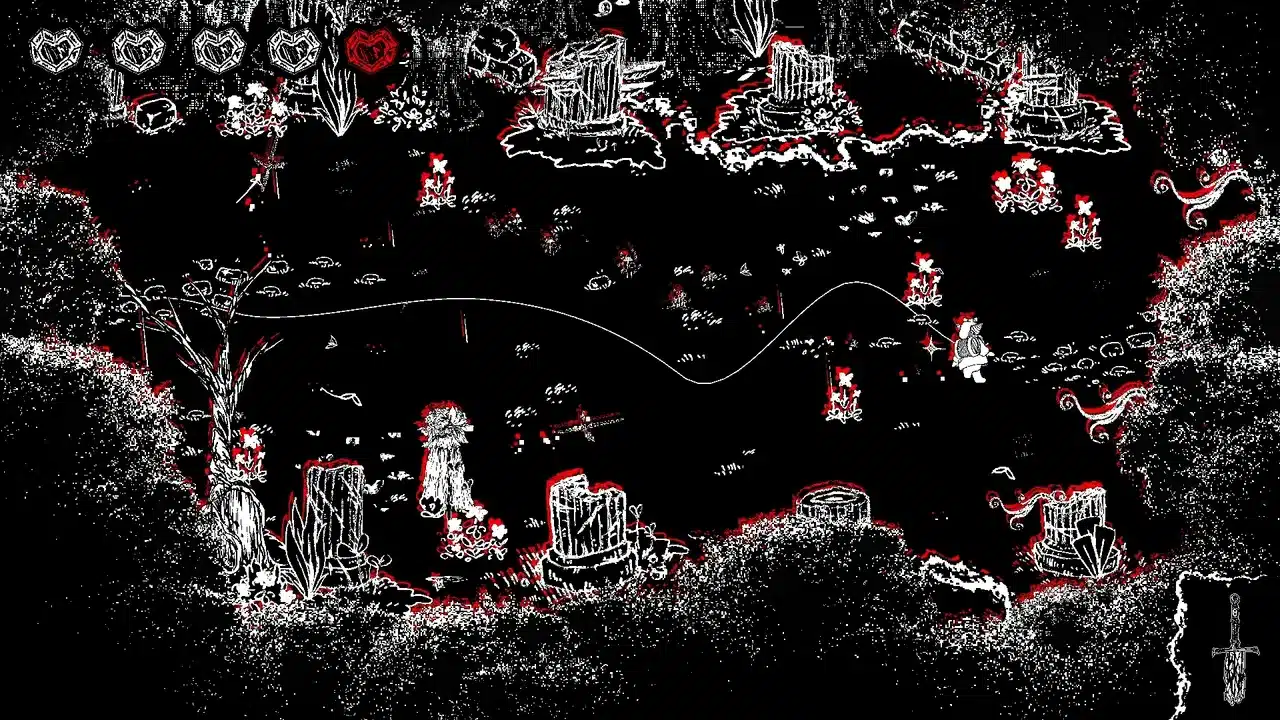
“We decided to remove shooting from the bullet hell genre and instead replace it with a grappling hook,” the team explains. That thread is not just a novelty bolted onto a familiar genre. It becomes the means of navigating the encounter, turning movement from the thing you do between attacks into the main event.
The developers describe “really smooth, floaty movement” paired with a “really precise, swingy grappling hook”. Those qualities have to coexist: the fairy needs enough freedom to feel graceful, but the thread needs enough precision to make approaching a dangerous creature feel intentional. A lovely animation is not much use if you cannot put the character where you want.
That balance took sustained work. Owl Machine says the game has been tuned throughout roughly three years of development, particularly the relationship between floating and grappling. Pacifism has not removed the need for skill; it has redirected it. You still have to read danger and commit to a route, except your reward is helping the monster rather than adding it to a body count.
Two colours, and a world with depth
The artwork is what stops me first. Trees, tangled growth and curious creatures have a sense of depth that should be difficult to achieve with so little colour to separate them. It has the stark appeal of an old one-bit game, but the lines feel handmade rather than generated from a grid.
There is a practical explanation behind the magic. “We ended up having a mixture of black ink on white paper and white gel pen on black paper,” the team tells me, describing how those approaches help distinguish background and foreground. The creatures need to stand out against all that intricate scenery.
“It’s a lot of effort to make sure it stays readable without compromising on that.” It is an excellent way to describe the problem: an illustration can invite you to lose yourself in its detail, but a fast-moving game must also tell you where you are and what is about to hit you.
As Screen Queensland’s profile of the founders explains, Mars draws on paper before the artwork is scanned and prepared for the engine. Some characters are assembled as separate pieces and animated like paper puppets. This is not simply a monochrome filter over conventional game art.
Black and white form the foundation, rather than an absolute ban on other colour. Red accents appear in encounters, and exploration can unlock alternative palettes that change the forest’s appearance. The restraint is still the point: Owl Machine gets an enormous amount of atmosphere out of a deliberately limited visual language.
The forest learned to speak
There was another limitation that did not survive development. “We originally planned to have no words in the game at all,” the team says. Dialogue arrived later, and became something players connected with rather than an explanation layered over the action.
The writing grew alongside the drawings. “As the artist, I’ll draw some weird creature and then the designer puts a completely new spin on the character with the writing.” One example is a little gnome with a knife. Instead of receiving a conventional conversation, it gnashes its teeth, growls and wriggles around. Apparently even the artist is not particularly fond of gnomes. Fair enough, honestly.
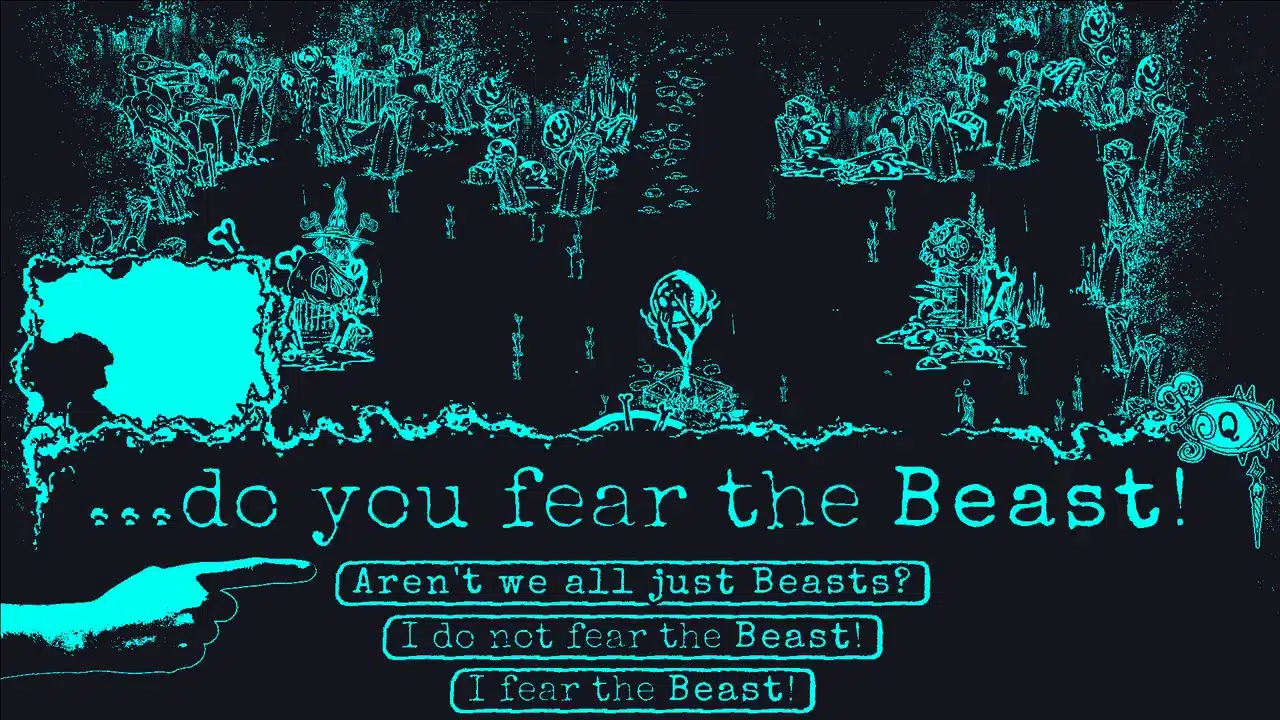
The intended mood is “spooky but sincere”, drawing on oral folk tales and storytelling. That is a promising combination. Creepiness does not have to mean cruelty, and helping a frightening creature becomes more interesting when it has a personality rather than simply a health bar.
Exploration draws inspiration from the original The Legend of Zelda: getting lost, finding odd trinkets and noticing paths you could easily overlook. Owl Machine estimates about four hours to reach the end, with a more thorough journey taking around eight. Hidden conversations and alternative palettes give curious players reasons to linger; those are the developers’ estimates, not a stopwatch claim from our own playthrough.
Queensland has earned this moment
The local pride is justified. Owl Machine had already won the Queensland Games Festival People’s Choice Award twice by July 2025, and its founders are Screen Queensland Games Residency alumni. Support from Screen Queensland and Screen Australia helped make the project possible. These are local artists building something unmistakably their own.
Our Queensland games worth finding at PAX offer a glimpse of that wider scene. Elsewhere, our Finch & Archie interview explores another Australian team reshaping a familiar genre through an unusual central mechanic. The good ideas are not confined to the biggest stands.
Key Fairy is available on Steam, with a free demo. Owl Machine also says it put substantial work into its Steam Deck Verified experience, which makes sense for an intimate, ink-drawn adventure you can carry away from the convention noise.
I leave wanting to spend more time in that forest. The art gets your attention, but the thinking behind it holds it: fewer colours demand clearer shapes, no gun demands better movement, and a monster can become someone worth helping. Queensland has every reason to be proud of this one.
About the author




The conversation
Be the first to join the conversation.