


Matchbox The Movie arrives on Apple TV on 9 October with the sort of pitch that normally sends a writer hunting for a mythology bible: John Cena, a CIA agent, old friends and a box of tiny cars. The clever choice is that nobody appears to have mistaken the toy shelf for sacred lore. Matchbox gives this film vehicles, scale and childhood muscle memory. It does not demand a prophecy about the orange plastic kingdom.
That freedom may be the reason this one looks surprisingly sturdy. Apple describes the film as a globetrotting adventure about childhood friends pulled into an international pursuit when their long-absent leader Sean, played by Cena, returns home. Jessica Biel, Sam Richardson, Teyonah Parris and Arturo Castro form the central crew. Danai Gurira, Corey Stoll, Bill Camp and Golshifteh Farahani are also along for the ride.
Matchbox works because the cars already have lives
A Matchbox car was rarely a fantasy object. It was the fire truck, family wagon, excavator or slightly battered sedan you had seen outside, shrunk until a kitchen floor could become a city. Mattel still describes the range as a collection of recognisable vehicle castings, from road cars to buses and aircraft. The appeal sits in observation: doors, paint, tyres, suspension, the satisfying weight in a small hand.

That makes Matchbox The Movie a different proposition from the growing queue of toy adaptations. POPTOPIC has already looked at how a new G.I. Joe film can benefit from dropping crossover homework. Matchbox arrives with even less narrative baggage. Its brand promise is simply that real machines become portable adventures.
The trailer leans into that beautifully literal idea. Cars slide, jump and trade paint. A motorcycle threads through a chase. An aircraft becomes another machine in the set rather than an excuse for a speech about destiny. Director Sam Hargrave, who built his reputation around close, physical action, is an inspired match. He can make a vehicle feel heavy before asking it to do something ridiculous.
John Cena is the right bridge between toy box and action film
Cena can sell a stunt without draining the joke from it. More usefully, he can share a frame. The official synopsis makes Sean the catalyst, but the premise belongs to a group of adults dragged back into the dynamics they formed as children. Richardson, Parris, Biel and Castro offer very different comic temperatures. That ensemble gives the film a chance to feel like friends improvising a game rather than supporting characters waiting for the hero to finish.
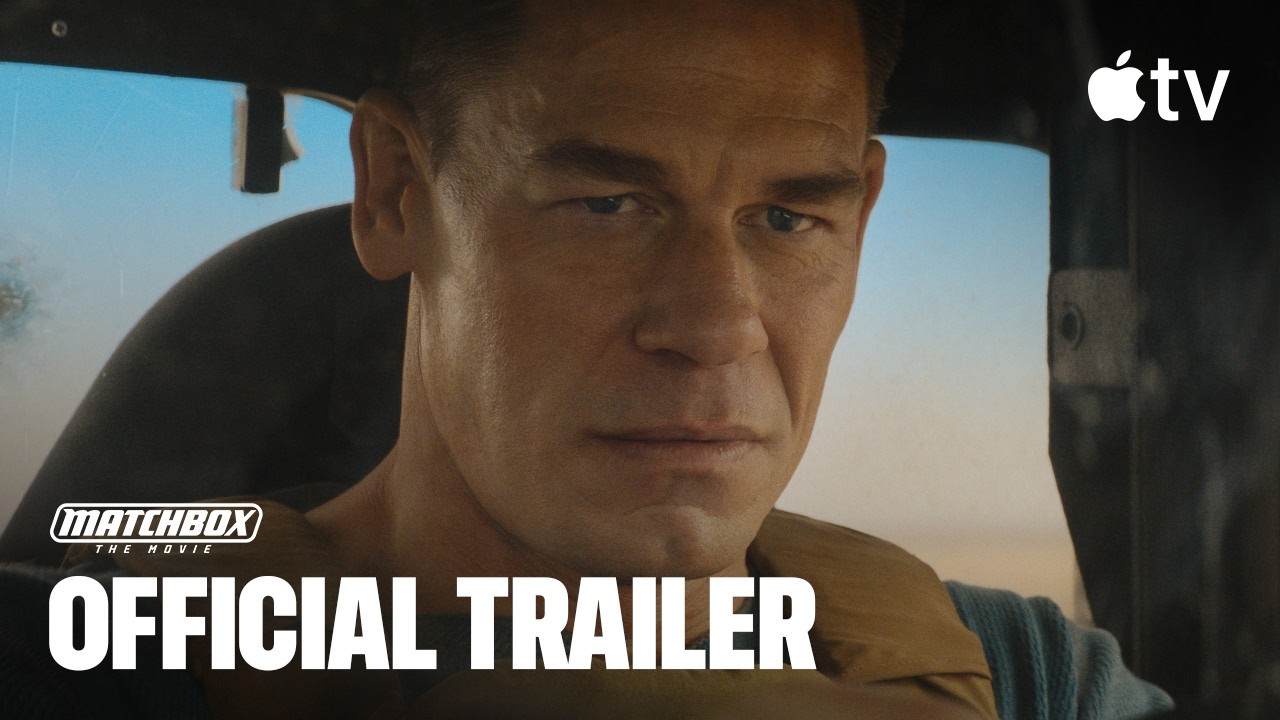
There is also a neat fit between Cena and a brand built around ordinary vehicles. He has spent years turning impossible proportions into an approachable screen presence. Matchbox needs that same balance. Its cars are familiar, but the play was never realistic. A station wagon could outrun a helicopter because the child moving it had somewhere urgent to be.
Apple TV does not need another toy universe
Mattel understandably wants durable screen franchises after Barbie. POPTOPIC has followed the company’s expanding Hollywood influence, including the prospect of Mattel chief Ynon Kreiz taking a larger entertainment role. Yet the worst lesson a studio could take from a breakout toy movie is that every product line requires dense canon, winking references and sequel scaffolding.
Matchbox The Movie can be lighter on its feet. The official merchandise page already foregrounds a 1969 Chevrolet Camaro prop replica and a director diorama. Those products point back to the machinery and filmmaking instead of inventing a Matchbox mythology. The movie only has to make the real car feel irresistible in miniature afterwards.
Apple has reason to want a broad action crowd, particularly after building a film slate beside prestige television. Its handling of releases still attracts scrutiny; Jessica Chastain recently put a different Apple TV decision on the record. A clean, self-contained crowd-pleaser would be useful.
The winning version of Matchbox The Movie is not a commercial disguised as lore. It is an old-school chase comedy that understands why those little cars survived: they looked like the world outside, then gave a child permission to drive straight through it.
About the author




The conversation
Be the first to join the conversation.