
Popular hot-tub meta Twitch streamer and OnlyFans model Indiefoxx has been hit with a permanent ban on Twitch, but strangely Amouranth account is still in good standing.
Twitch streamer Jenelle ‘Indiefoxx’ Dagres has been banned shortly after losing her partnership with streaming giant Twitch. This ban is reportedly final and permanent and is a result of multiple severe violations of the platform’s terms of service.
RELATED: Lawyer angry after Amouranth promoted OnlyFans to his underage son.
The 26-year-old Twitch streamer and OnlyFans model known as Jenelle Dagres, better known as Indiefoxx, is one of the most controversial egirl streamers on the platform. Jenelle Dagres, better known as Indiefoxx, levelled harsh, and verifiable false, allegations against a popular World of Warcraft and League of Legends streamer Byron ‘Reckful’ Bernstein who took his own life shortly after at the young age of 31.
Although there is no proof that Indiefoxx false allegations were what drove Bernstein to tragically end his life, the timing lead a lot of people to believe that it, at least, may have been the final straw. Byron supposedly proposed to the love of his life shortly before the allegations were made. Also, other content creators have previously had their careers ended over similar, unproven, allegations.
Indiefoxx showed little remorse but instead deleted the Twitlonger allegations and refused to discuss it. She even added the streamer’s name to the word censor list after-the-fact. However, she quickly shifted her content and started doing borderline NSFW streams by exploiting Twitch’s Community Guidelines and Terms of Service.
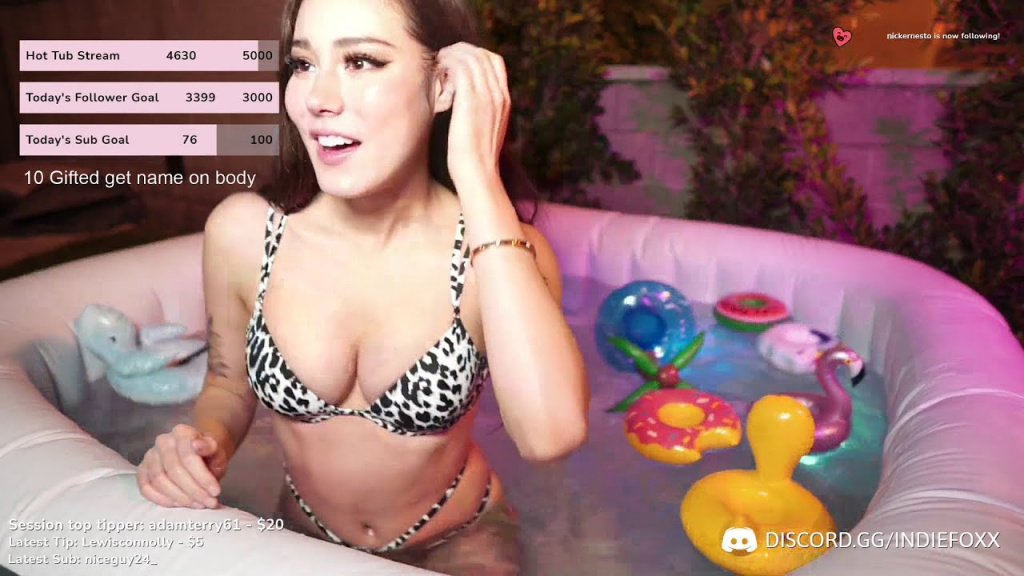
Since the start of the year Indiefoxx has been suspended for violating the sexual activity and conduct guidelines 8 times, with the 8th being the final and permanent ban.
How many times has Indiefoxx (Jenelle Dagres) been banned?
Just this year alone (2021) Indiefoxx has been banned a total of 7 times!
- Friday, January 29 — 3 days
- Thursday, February 1 — 3 days
- Monday, February 5 — 3 days
- Saturday, February 24 — 1 day
- Saturday, April 10 — 3 days
- Tuesday, June 22 — 3 days
- Monday, June 28 —on going
Above is the list of all Indiefoxx bans since the start of 2021 put together by Dexerto. Other members of the Twitch streaming community have taken note of how short the bans have been for these supposed “severe violations” of their community guidelines. A lot of people have accused Twitch of being biased and protecting female Twitch streamer who earn a lot of money.
Twitch has warned other people that if they receive three bans on the platform that their access will be permanently revoked and smaller receivers have received much longer, usually 30 day, suspensions for smaller violations. Even former professional Overwatch player turned variety streamer Felix ‘xQc’ Lengyel slammed Twitter for their bias.
“After two times I thought I was going to get perma-banned,” xQc said in a rant during his live stream. “I had the word ‘perma’ over my head for months for a ban that I received 8 months ago. But Indiefoxx gets a 3 day ban after her 5th ban, that makes no sense at all.”
Shortly after Indiefoxx’s 5th ban was lifted she went online with the stream title “REFORMED EGIRL RATED G” where she continued to push Twitch’s community guidelines with sexually suggestive content. She was then banned again for the 6th time, and (so far) it has lasted for 6 days making it her longest ban to date.
A source close to Twitch has confirmed this ban is, in fact, permanent. However, she is trying to appeal the process and reportedly is willing to “pay a fine” for her infringement.
“She’s been permanently banned but she’s trying to appeal it asking for a 30 day ban and a fine instead. I don’t know much more than that, to be honest. But Twitch have reversed permanent bans before… so who knows,” the source added.
Jenelle ‘Indiefoxx’ Dagres has been very quite on social media. The last post she made was simply saying “hi” with an accompanying pleading face emoji, but the responses to her tweet have been mixed at bests.
Hey Jenelle, I hope you’re doing alright during these sad times. Me? I’m a mess. It’s been a week now of waking up hoping the entire this has just been a nightmare. I miss your laugh, your loving eyes, your voice. I need to know you’re okay. Yours truly, Hooti. Tier 3 subscriber.
— Hooti Tooti (@Hooti_osrs) July 4, 2021
“Hey Jenelle, I hope you’re doing alright during these sad times. Me? I’m a mess. It’s been a week now of waking up hoping the entire this has just been a nightmare. I miss your laugh, your loving eyes, your voice. I need to know you’re okay. Yours truly, Hooti. Tier 3 subscriber,” one fan wrote.
Another, though, wasn’t so nice: “Six bans in SIX months….I mean, what did ya think was gonna happen. Twitch bent the rules for yall and made a separate category and yall STILL bent the rules. I’m happy Twitch is doing the right thing.”
Amouranth unscathed.
Strangely, a similar Twitch streamer who continuously crosses the lines, Amouranth, has not lost her partnership nor been banned for identical streams.
Amouranth and Indiefoxx are often referenced as pioneers in the hot-tub meta exploit on Twitch. They are also both stream very sexually suggestive ASMR content. Amouranth has also been banned numerous times from Twitch but, like Indiefox, only receives short suspension for her repeated severe violations of their terms of service.

Amouranth has been banned, at least, four times for violating Twitch’s rules. Earlier this year she had her entire channel demonetised but it was restored in under a week. If the “3 strike rule” applied to Amouranth she would have been permanently banned by now, or — at bare minimum –have lost her Twitch partnership.
Jenelle ‘Indiefoxx’ Dagres has removed all links to her Twitch profile from her existent social media accounts but Amouranth evades a perma-ban and remains unscathed albeit making identical content.