

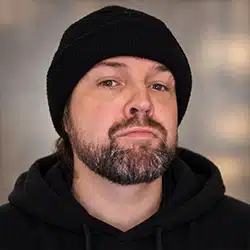
John Romero has a new publishing deal, but the important part of his comeback is the smaller game taking shape around it. The Doom co-creator says his studio has rehired ten people after shrinking to five. Its next shooter is being redesigned for a team of roughly 15–16, rather than finishing the old 110-person project.
Speaking to VGC at Gamescom Asia on 30 October, Romero said the studio owns the earlier work and can carry assets into the redesign. He has not named the publisher or announced when the new game will be revealed.
A new game can inherit work without inheriting its scale
Romero describes a “complete redesign”, with existing art, characters and code helping the smaller project get started. That makes the new agreement more interesting than a simple funding-rescue headline. Saving useful work and promising to finish the same game are very different commitments.

A smaller team does not automatically make a large project manageable. The sensible question is what the design asks that team to deliver: how many systems must connect, how much content needs building and how much can be tested properly. A reduced headcount is a constraint, not an optimisation setting.
Keeping usable assets can help with that reset. It does not make every old feature economical to finish, or tell players which features survived. Until the new game is shown, treating the earlier project’s ambition as its specification would be guesswork.
The studio’s own website now confirms that the shooter remains in development and has been rescoped. That is the useful commitment for players to hold onto: there is still a game being made, with its shape reconsidered. A revival does not have to mean preserving every abandoned plan.
The people returning matter as much as the assets
The team’s continuity deserves attention here. Romero Games says most of its people have worked together for nearly a decade, with some relationships going back twice that long. Its published culture statement places respect and long working relationships among its values. Those are the studio’s own descriptions, rather than an independent audit of employees’ experience.
But they identify something a folder of source files cannot preserve by itself: people who understand one another’s decisions. Rehiring experienced colleagues can carry working knowledge into a new project. It also gives an otherwise abstract comeback story a concrete human outcome.

This is a studio with more than one veteran at its centre. Brenda Romero’s official biography identifies her as Romero Games’ co-founder and CEO in Galway, Ireland. The new publisher details come from John’s interview; they should not turn the wider team into scenery in a lone-genius rescue story.
That concern runs through Greg Zeschuk’s recent criticism of how games leadership treats developers. Familiar names and intellectual property can survive while the people who made them successful disappear. In Romero Games’ case, a publishing deal and returning staff are separate pieces of good news, and both deserve to be reported.
Creative freedom still needs a finishable brief
Romero says the new publisher has no creative mandates for the project, and that a smaller team lets him spend more time making the game directly. The interview gives his account of the arrangement, rather than disclosing the contract.
Creative freedom can give a team room to commit to a distinctive idea. It does not remove deadlines, technical problems or the need to decide what can be finished. The encouraging part is the stated attempt to bring the game’s scope into line with the people available to make it.
Our coverage of Avi Lewis’s proposed worker-led route for BioWare concerned a different, still-proposed ownership model. This is a publishing agreement. Keeping that distinction clear helps avoid turning every studio survival story into the same industry slogan.
Closer to home, our interview with Australia’s Toot Games explored how a focused idea grew through years of work. Romero’s next game will have to stand on what its own team builds. For now, a redesigned shooter with returning colleagues is a much more useful promise than pretending the old production can simply resume.
About the author






The conversation
Be the first to join the conversation.