

South Park has found the perfect symbol for the modern billionaire: a tiny talking penis desperate to share opinions on podcasts. “Billionaire Weenietown” turns data-centre anxiety, anti-vaccine nonsense and wealthy men’s compulsive posting into one disgusting little ecosystem. Then it closes with AI-generated imagery—and hands viewers an hypocrisy argument almost as loud as the episode itself.
The contradiction is the story. Comedy Central’s official synopsis says Butters is furious about data centres being built in local backyards. In the episode, those facilities drain resources and interrupt his precious television time. His parents answer with podcast logic and blame a childhood vaccination for making him politically troublesome. It is crude satire with a very recognisable target.
South Park’s Billionaire Weenietown joke bites its owners
The billionaire creatures are less worried about what their wealth does than about being seen doing it. Their rules allow private jets, yachts and excess, but public arguments with celebrities and endless Joe Rogan appearances are considered bad manners. The episode’s blunt advice to the ultra-rich is essentially: enjoy the money and learn to shut up.

That lands differently when the people delivering it are Trey Parker and Matt Stone. Their latest Paramount deal was widely reported at $1.5 billion, although a corporate agreement is not the same thing as two personal bank balances. The Guardian’s review makes the tension explicit: two immensely wealthy creators are attacking a class whose orbit now includes their own commercial success.
That does not make the joke invalid. Wealth does not revoke the ability to criticise wealth. It does make the show’s favourite posture—standing outside every tribe and laughing at all of them—harder to maintain. The weenie metaphor works because South Park knows its creators are close enough to smell the yacht fuel.
The AI ending is where viewers split
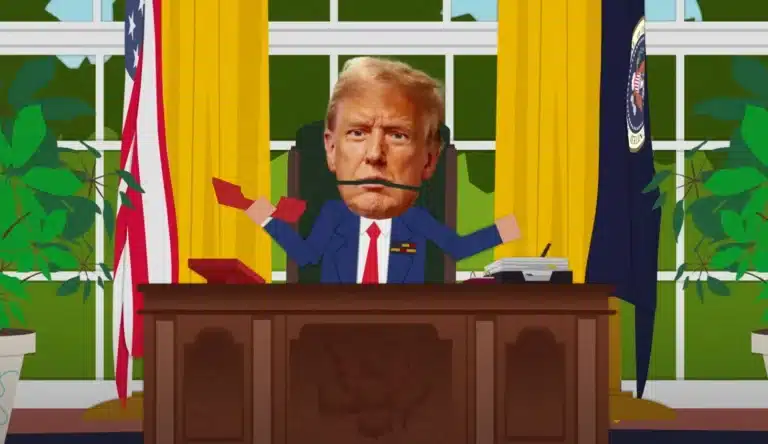
The episode ends with an AI-generated Trump sequence, according to both The Guardian and contemporary recaps. Parker and Stone have also openly discussed Deep Voodoo, the synthetic-media company that grew out of their production business, including during a 2026 television interview.
Viewers noticed. In the post-episode discussion, some called the AI use a contradiction; others argued that the visibly synthetic billionaire town and ending were the point. Both readings are plausible. The episode criticises the political and physical power surrounding AI infrastructure, not every possible use of the technology. Yet it still benefits from the tool while mocking the resource hunger around it.

That dispute echoes a broader audience problem. When AI songs and animation triggered a viewer backlash on The Block, “it is only a tool” did not end the argument. People were asking who gained, whose work was replaced and whether the finished result deserved the platform. South Park is sharper than a reality-TV filler segment, but it does not escape those questions by making the machine part of the gag. A related fight is already unfolding around Twitch using AI transcripts to judge which creators suit advertisers, where automation also hides a human power decision.
Hypocrisy can be funny, but it still needs an answer
The strongest defence of “Billionaire Weenietown” is that self-implication has always been part of South Park. Parker and Stone build jokes from compromised positions, then refuse to hand audiences a clean moral exit. Butters gets results by becoming furious, only to retreat into his screen once the immediate inconvenience disappears. The billionaires are monstrous, ridiculous and commercially adjacent to the people writing them.
That messiness is more interesting than a simple “billionaires bad” episode. It also pushes Season 29 beyond the concern we raised when South Park became “South America” and risked chaining itself to one political target. Here, the show takes aim at Trump, podcasters, media ownership, anti-vaxxers, data centres and—whether intentionally or not—its own creators.
The final joke therefore works, but it does not settle the charge. South Park can use AI and criticise AI power at the same time. Viewers can also laugh and still ask who pays for the electricity. A satire this eager to interrogate everyone should expect the camera to swing back around.


The conversation
Comments are closed.