


Valve’s Steam Frame has finally made the most awkward part of buying virtual reality hardware feel effortless. It speaks Steam natively, streams from a gaming PC without making the living room look like a cable experiment, and asks you to live inside Valve’s ecosystem instead of Meta’s.
In Australia, that freedom starts at A$1,609 for 256GB. Meta’s 512GB Quest 3 is A$969. The A$640 gap is what we are calling the privacy premium—and even people happy to pay it should know exactly what it buys.
Steam Frame is premium, but its screens are not futuristic
The Steam Frame is the more ambitious computer. Valve gives it a Snapdragon 8 Gen 3, 16GB of memory, eye tracking, Wi-Fi 7 and a dedicated 6GHz wireless adapter for low-latency PC streaming. It can run compatible games locally under SteamOS or act as a beautifully tidy doorway into your desktop library.
What it does not give you is OLED. Its two LCD panels run at 2160 by 2160 pixels per eye behind pancake lenses. The Quest 3 also uses LCD and pancake optics, at 2064 by 2208 pixels per eye. Steam Frame has useful advantages, but its display is not the generational leap Quest 3 delivered over Quest 2. Valve’s monochrome passthrough is also less convincing for mixed reality than Meta’s full-colour cameras.

The best case for Frame is therefore not a specification victory. It is the experience around the specifications. PC Gamer’s launch review found a light, comfortable headset with excellent wireless behaviour and unusually simple PCVR setup. If your collection already lives on Steam and you resent placing another Meta device in your home, that convenience has genuine value.
Quest 4 exists as a plan, not a product
Meta has not announced a headset called Quest 4. There is no official specification sheet, price or release date. Meta CTO Andrew Bosworth has said publicly that the company is building multiple next-generation headsets, but that is as far as the promise goes.
Reporting from UploadVR says Meta began work on a more traditional, gaming-focused Quest successor after pushing an ultralight headset project further out. The realistic window discussed around that reporting is late 2027 or 2028. Plans can move, especially when Meta is juggling several shapes of wearable computing at once.
Waiting could still be smart for a Quest 2 owner who is comfortable for another year. Quest 3’s jump—pancake lenses, sharper displays, better graphics and useful colour passthrough—set a high bar, and a real Quest 4 should earn its number with another visible advance. But “wait for Quest 4” currently means waiting for an announcement before you can begin waiting for the headset.
What should you buy?
Buy Steam Frame now if you have a strong gaming PC, a substantial Steam library and a real objection to Meta’s account-and-data ecosystem. That last part is not imaginary: Quest 3 requires a Meta account and phone app for setup, while Valve’s proposition is built around Steam. Australians are already being asked to make uncomfortable privacy trades around gaming, as we found while examining Steam age checks and the broader identity toll attached to R18+ games.
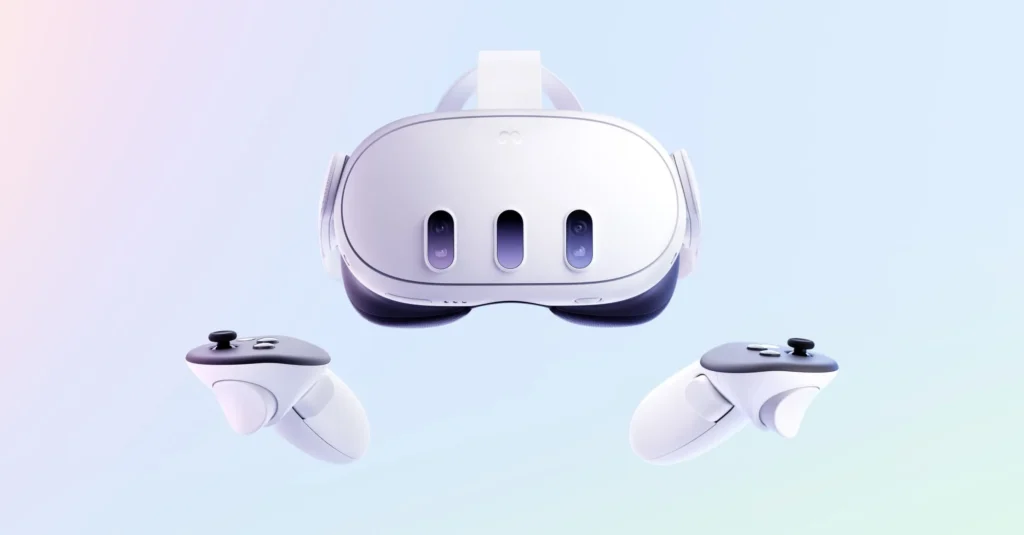
Buy Quest 3 if you want the strongest value today. Meta’s current Australian store price is A$969, it has a mature standalone library, competent PC streaming and colour mixed reality. Games such as our reviewed Quest 3 favourite How to God show how much the hardware can already do.
Wait if you already own a Quest 3. Steam Frame is cleaner and more independent, but not A$1,609 worth of visual revolution for most existing owners. The absence of OLED makes that especially difficult to ignore.
Valve has built the VR headset many PC players wanted. It has also priced it as an escape route. If leaving Meta is the feature you value most, the privacy premium may be worth paying. If you mainly want better virtual reality, keep your Quest 3 and let the next generation reveal itself first.
About the author


The conversation
Comments are closed.